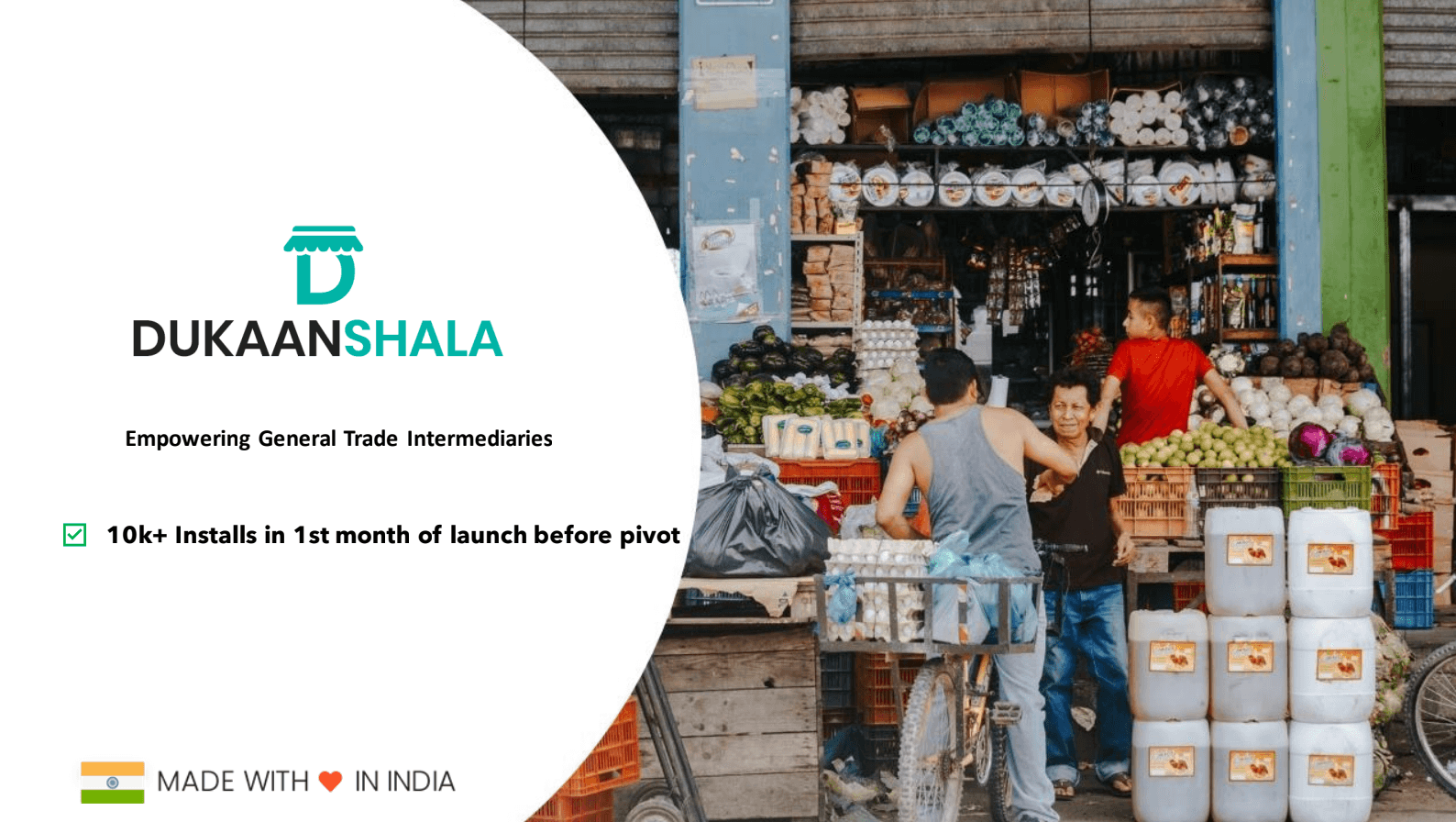
Snapshot
Status
Archived
Type
commerce infrastructure
Timeframe
2020–2021
What I Owned
Product
mobile-first storefront, inventory, accounting, merchant UX
Growth
ads, YouTube micro-influencers, offline acquisition loops
Distribution
distributor-led retailer adoption and incentive alignment
Fundraising
investor conversations, market positioning, capital planning
Customer Ops
retailer relationships, feedback loops, field insights
Problem
COVID forced MSMEs online almost overnight, but most tools focused on backend operations — not storefront demand.
Journey
We started by observing repeated operational breakdowns in how merchants handled orders during lockdown, then validated the pattern through direct conversations with friends and family running businesses.
We quickly built a lightweight, Shopify-like, mobile-first product that was easy to set up and bundled inventory and accounting basics.
Early growth moved fast, with around 5k installs in the first week driven by ads, YouTube micro-influencers, and strong offline distribution.
The biggest unlock came through distributor networks. We worked directly with sales and operations personnel already in daily contact with retailers, which created aligned incentives, tighter feedback loops, and deeper adoption.
That human distribution layer drove better product insights, stronger relationships, and around $500k in GMV movement.
Wins & Failures
Wins
✓Built and launched a product in days during peak COVID disruption.
✓Achieved around 5k installs in the first week.
✓Scaled to around $500k GMV through strong distribution.
✓Identified distributor networks as a high-leverage GTM channel.
Failures
○Capital and distribution — not product alone — determined winners in this market.
○The market required heavy capital with unclear monetization.
○Merchant willingness to pay remained low.
○Fundraising turned cautious post-COVID.
Where it stands
The core product worked, but scaling required significant capital and long-term conviction in merchant monetization. We explored distributor-led supply chain digitization (including a Chickpet pilot) and dark-store models, but both paths were capital intensive and we chose not to pursue further.
What it needs:
- •Long-duration capital for expansion in low-ticket merchant markets.
- •A stronger monetization backbone before aggressive scaling.
- •Distribution models that balance offline trust with digital efficiency.
What this taught me
•Distribution is not just digital; in many markets, it is human and offline first.
•Strong product-market fit is not enough if capital intensity and monetization are misaligned.
Collaboration
Archived project, but open to conversations on offline-first distribution systems, commerce GTM design, and capital-aware scaling in fragmented merchant markets.
Reach out →